Student Life at Astrakhan State Medical University: A Complete Guide for International Students

Experience Student Life at Astrakhan State Medical University

Choosing a medical university is not only about academics, tuition fees, or clinical training. For students pursuing a six-year medical degree abroad, student life is an equally important part of the experience.

For an international student, the university becomes a second home. The quality of accommodation, campus environment, friendships, cultural activities, food, sports, safety, transportation, and opportunities to explore the city can all shape the overall experience.

Astrakhan State Medical University (ASMU) offers international students a multicultural academic environment in the historic Russian city of Astrakhan. The university highlights modern educational infrastructure, student accommodation, cultural activities, sports, research opportunities, clinical exposure, and dedicated support for international students.

This guide explores what students can expect from student life at Astrakhan State Medical University, including campus life, hostel accommodation, international student communities, food, sports, cultural events, clinical exposure, life in Astrakhan, and the overall student experience.

Student Life at Astrakhan State Medical University

Life at Astrakhan State Medical University is designed around more than classroom learning.

Students spend their time attending lectures and practical classes, working in laboratories, participating in clinical training, studying for examinations, joining university activities, socialising with classmates, and exploring life in Astrakhan.

The university describes its campus as a multicultural environment where students from different countries come together for education and personal development. It also highlights academic guidance, counselling, cultural adaptation support, mentorship, and language assistance for international students.

This combination of academics and extracurricular activities gives students the opportunity to develop not only as medical students but also as independent young professionals.

A Multicultural University Environment

One of the most interesting aspects of studying abroad is the opportunity to interact with people from different backgrounds.

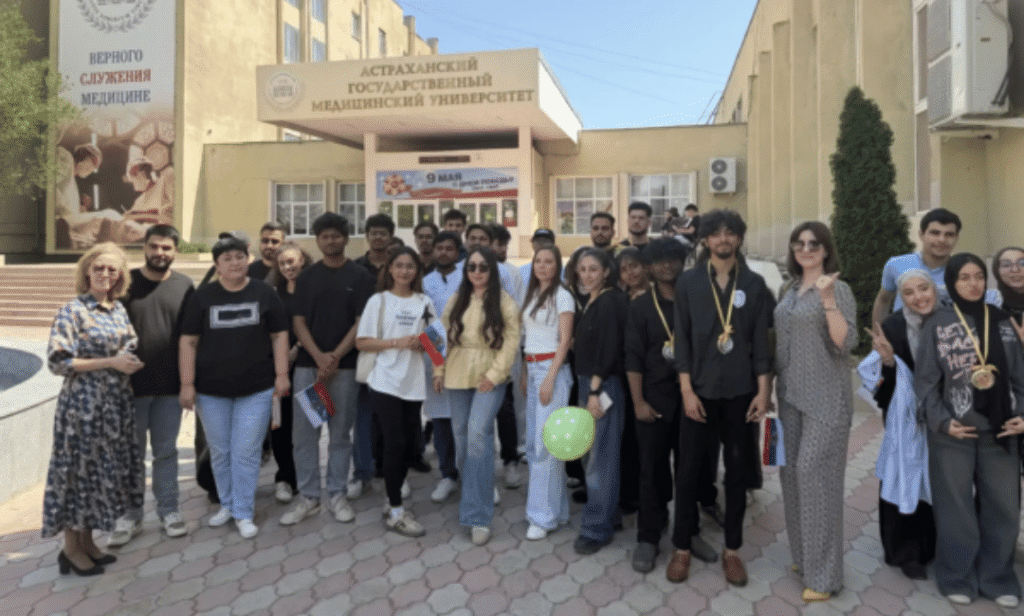
At Astrakhan State Medical University, international students study alongside students from different countries, creating a multicultural environment. The university specifically highlights its international student community and support services designed to help foreign students adapt to university and life in Russia.

For an international student, this can mean:

  • Making friends from different countries
  • Learning about different cultures
  • Celebrating international festivals
  • Improving communication skills
  • Developing cross-cultural understanding
  • Building an international professional network
  • Becoming more independent

For medical students, this international exposure can also be valuable because healthcare increasingly involves communication across cultures and communities.

Campus Environment at ASMU

The campus environment plays an important role in a student’s daily routine.

ASMU highlights modern classrooms, lecture halls, medical laboratories, research facilities, digital library and study spaces, simulation facilities, clinical-training infrastructure, and internet connectivity.

Students therefore have access to spaces for both academic learning and independent study.

A typical academic routine may include:

Morning: Lectures and theoretical classes

Afternoon: Practical classes, laboratory work or clinical training

Evening: Self-study, assignments, group discussions, sports, social activities or personal time

Medical education requires consistent study, so students generally need to develop a disciplined routine. At the same time, having access to recreational activities can help students maintain a healthier balance.

Hostel Life at Astrakhan State Medical University

For international students, accommodation is one of the first things to consider after arriving in Russia.

Astrakhan State Medical University provides hostel accommodation for local and international students, with the university describing its hostels as secure, comfortable, and designed to support students during their academic journey.

The facilities highlighted by ASMU include:

  • Furnished rooms
  • Beds and study tables
  • Central heating
  • Internet and Wi-Fi
  • Common kitchens
  • Dining areas
  • Laundry facilities
  • Common rooms
  • Recreation spaces
  • Security
  • CCTV monitoring
  • Separate accommodation arrangements for boys and girls

Why Hostel Life Matters

Living in a university hostel can make the transition to a foreign country easier.

Students are able to live close to their academic environment and interact with fellow students on a daily basis. Hostel life can also help students develop independence, time management, communication skills, and responsibility.

For many international students, some of their closest friendships can begin in their hostel.

Making Friends at ASMU

Moving to another country can initially feel unfamiliar. Students may be away from their families, familiar food, local language, and established social circles.

The international environment at ASMU can help students build new friendships.

Students can meet classmates through:

  • Lectures
  • Practical classes
  • Hostel life
  • Sports activities
  • Cultural events
  • Student clubs
  • Academic conferences
  • Group projects
  • University celebrations

Over time, these friendships can become an important part of the overseas university experience.

International students can also learn from one another about different cultures, languages, food traditions, festivals, and lifestyles.

Sports and Fitness Activities

Medical students spend many hours studying, attending practical classes, and preparing for examinations. Maintaining physical activity can therefore be an important part of student life.

ASMU highlights sports facilities, a university gym, sports competitions, fitness activities, and recreational opportunities for students.

Students can use sports and fitness activities as a way to:

  • Stay physically active
  • Take breaks from academic work
  • Meet other students
  • Reduce everyday academic stress
  • Develop teamwork
  • Maintain a healthy routine

Sports competitions can also provide students with opportunities to represent their groups or participate in university-wide activities.

Cultural Events and Celebrations

University life becomes much more memorable when students have opportunities to celebrate together.

ASMU highlights cultural celebrations, international festivals, music and dance events, talent activities, sports tournaments, community programs, and other student activities.

These events can help international students remain connected to their own cultures while also discovering Russian traditions and other cultures represented on campus.

Cultural activities can include:

  • Festival celebrations
  • Music performances
  • Dance programs
  • Student competitions
  • Talent shows
  • International cultural events
  • University celebrations
  • Outdoor activities

Such events also provide students with opportunities to develop confidence, creativity, communication skills, and leadership abilities.

Academic Life and Student Activities Go Together

While student life is important, academics remain the centre of the university experience.

Medical education is intensive, and students need to dedicate significant time to lectures, practical classes, laboratory work, clinical training, assignments, and examinations.

ASMU’s campus environment combines academic facilities with recreational and student activities, allowing students to create a balanced routine.

A successful student generally learns to balance:

Study + Clinical Training + Sleep + Fitness + Social Life + Personal Development

Students who establish a consistent schedule early in their medical education are more likely to manage the demands of the course effectively.

Clinical Exposure as Part of Student Life

At a medical university, clinical exposure is not simply an academic requirement—it becomes an important part of everyday student life.

ASMU states that students receive hands-on clinical training through affiliated hospitals and healthcare centres, including early clinical exposure, patient interaction, simulation practice, and case-study opportunities.

As students progress through their course, their routine gradually moves from predominantly classroom-based learning towards greater clinical involvement.

This gives students opportunities to observe how doctors communicate with patients, understand hospital workflows, discuss medical cases, and apply theoretical knowledge in practical settings.

For many students, this is when the experience of becoming a doctor begins to feel more real.

Learning Russian During Student Life

Students enrolled in English-medium medical programs may still benefit greatly from learning Russian.

ASMU states that its General Medicine program is offered in English and Russian, while also noting that basic Russian can be helpful during clinical training because students interact with local patients.

Learning Russian can make everyday life easier as well.

It can help students communicate when:

  • Shopping
  • Using public transportation
  • Ordering food
  • Visiting local establishments
  • Speaking with neighbours
  • Communicating with patients
  • Navigating hospitals
  • Handling everyday situations

Students do not necessarily need to become fluent immediately. Building vocabulary and learning practical phrases gradually can make the transition much easier.

Food and Dining in Astrakhan

Food is an important part of adapting to life abroad.

Astrakhan offers supermarkets, local markets, restaurants, cafés, and food options for different preferences. ASMU’s city information specifically highlights access to Indian and international cuisine, while its hostel information notes shared kitchen facilities and nearby grocery stores.

Students can therefore choose between eating outside, buying groceries, or preparing meals themselves where hostel facilities permit.

For Indian students, access to familiar food can make the initial transition to Russia more comfortable.

At the same time, exploring Russian cuisine can become an enjoyable part of the international student experience.

Life Outside the Campus

Student life is not limited to university buildings.

Astrakhan itself provides students with opportunities to experience Russian culture and explore the city.

The city is located near the Volga River and Caspian region and is known for its historical architecture, cultural diversity, parks, riverfront areas, cafés, shopping areas, and recreational spaces. ASMU describes Astrakhan as a student-friendly city with public transportation, everyday services, healthcare facilities, shopping, and entertainment options.

Students can spend their free time:

  • Exploring the city
  • Visiting historical locations
  • Walking along the riverfront
  • Spending time in parks
  • Visiting cafés
  • Shopping
  • Trying local food
  • Attending cultural events
  • Meeting friends
  • Exploring nearby attractions

These experiences can provide a welcome break from the intensity of medical education.

What Is the Cost of Everyday Student Life?

The overall cost of living is an important consideration for international students.

ASMU describes Astrakhan as an affordable and student-friendly city, with access to supermarkets, public transportation, restaurants, healthcare services, shopping, and everyday facilities.

Students should budget separately for:

  • Hostel accommodation
  • Food
  • Transportation
  • Mobile phone and internet
  • Study materials
  • Clothing
  • Personal expenses
  • Entertainment
  • Medical and insurance-related expenses
  • Travel

Actual spending will vary considerably according to lifestyle.

A student who cooks regularly and uses public transportation may spend differently from someone who frequently eats at restaurants or travels.

Safety and Student Support

Safety and adaptation are important considerations when moving abroad.

ASMU describes Astrakhan as a peaceful and welcoming environment and highlights hostel security measures such as 24-hour security and CCTV monitoring.

The university also highlights international student assistance, academic guidance, counselling, mentorship, cultural adaptation support, and language assistance.

International students should nevertheless follow normal safety practices:

  • Keep important documents secure.
  • Follow university and hostel regulations.
  • Learn emergency contact procedures.
  • Be aware of local laws.
  • Keep family members informed about travel plans.
  • Avoid unfamiliar areas late at night.
  • Keep digital and physical copies of important documents.

Being responsible and aware is an important part of living independently abroad.

Medical Conferences, Seminars and Research Activities

Student life at a medical university can also include academic activities beyond the standard curriculum.

ASMU highlights scientific conferences, seminars, workshops, research opportunities, case studies, and student research projects.

Students interested in research or academic medicine can use these opportunities to:

  • Learn how medical research works
  • Present academic work
  • Attend scientific conferences
  • Develop professional networks
  • Explore specialised medical fields
  • Improve presentation skills
  • Work with other students and faculty members

Participation in such activities can be particularly useful for students considering postgraduate education or research-oriented careers.

A Typical Day in the Life of an ASMU Student

Every student’s schedule will be different depending on their year and academic timetable, but a typical day may look something like this:

Morning

Students begin their day with breakfast before attending lectures, practical classes, or other academic sessions.

Afternoon

The afternoon may involve laboratory work, practical sessions, clinical exposure, hospital training, or additional academic activities.

Evening

After academic commitments, students may return to the hostel, study independently, complete assignments, attend the gym, participate in sports, or spend time with friends.

Night

Students typically use the evening for revision and preparation for the next day’s classes.

On weekends, students may have more time for sports, cultural activities, shopping, sightseeing, socialising, or exploring Astrakhan.

The exact schedule depends on the student’s year, timetable, examinations, and clinical responsibilities.

Adapting to Life in Russia

The first few weeks can be the biggest adjustment for an international student.

Students may need time to become comfortable with:

  • The Russian language
  • Weather and seasons
  • Food
  • Currency
  • Transportation
  • Academic expectations
  • Hostel routines
  • Local culture
  • Different social customs

The best approach is to adapt gradually.

Students should remain open-minded, ask questions when they are unsure about something, communicate with classmates and university staff, and build a routine that includes both academic responsibilities and personal well-being.

Why Student Life Matters for Medical Students

A medical degree takes several years of sustained effort. Students need an environment where they can study effectively while also maintaining their physical and social well-being.

A positive student experience can help develop:

Independence — Living away from home teaches students to manage daily responsibilities.

Communication — Interacting with international classmates improves communication and interpersonal skills.

Teamwork — Sports, group activities, clinical training, and academic projects encourage collaboration.

Confidence — Participating in events and adapting to a new environment can build confidence.

Cultural awareness — Living among people from different backgrounds broadens students’ perspectives.

Professional maturity — Clinical exposure and interaction with healthcare professionals help students understand the responsibilities of being a doctor.

Why Choose Astrakhan for Student Life?

Astrakhan offers an interesting combination of university education and city life.

According to ASMU, students benefit from a relatively affordable lifestyle, public transportation, cultural diversity, shopping facilities, healthcare services, restaurants, recreational spaces, and access to the city’s historical and natural attractions.

The city’s location near the Volga River and Caspian region also gives students a distinctive environment compared with larger Russian cities.

For students who prefer a city where they can focus on education while still having access to everyday urban facilities, Astrakhan can be an interesting option to consider.

Final Thoughts on Student Life at Astrakhan State Medical University

Student life at Astrakhan State Medical University is about much more than attending medical classes.

Students become part of an international academic community, live in a multicultural environment, participate in sports and cultural activities, gain clinical exposure, explore research opportunities, and experience everyday life in Russia.

The university highlights modern academic facilities, international student support, hostel accommodation, cultural programs, sports, clinical training, and recreational opportunities.

At the same time, students should remember that medical education requires discipline. The most rewarding university experience comes from finding the right balance between academic responsibilities and personal life.

For prospective students, the ASMU Campus Life page provides further information about the university environment. Students can also explore ASMU Hostels, learn more about Astrakhan, or visit the official Astrakhan State Medical University website for additional information.

Frequently Asked Questions

1. What is student life like at Astrakhan State Medical University?

Student life at Astrakhan State Medical University combines academic learning, clinical training, accommodation, sports, cultural activities, research, and social interaction. The university promotes a multicultural environment for students from different countries and highlights student activities such as cultural festivals, sports competitions, seminars, conferences, music and dance events, and student clubs.

Students generally spend their weekdays focused on lectures, practical classes, laboratory work, clinical training, and self-study, while evenings and weekends can be used for sports, social activities, cultural programs, sightseeing, or personal time.

2. Does Astrakhan State Medical University have a hostel for international students?

Yes. ASMU provides hostel accommodation for local and international students. The university highlights furnished rooms, central heating, Wi-Fi, kitchens, laundry facilities, common areas, security, and CCTV monitoring. Separate accommodation arrangements are also provided for boys and girls.

Hostel life can also be an important social part of the university experience because students live alongside classmates and other international students.

3. What activities can students participate in at ASMU?

Students can participate in a variety of academic and extracurricular activities. ASMU highlights sports tournaments, fitness activities, cultural celebrations, international festivals, music and dance events, talent programs, student clubs, scientific conferences, workshops, and community programs.

These activities allow students to take breaks from academics while developing teamwork, leadership, communication, and social skills.

4. Is Astrakhan a good city for international students?

According to ASMU, Astrakhan offers a student-friendly environment with relatively affordable living, public transportation, shopping facilities, restaurants, healthcare services, recreational areas, and cultural attractions. The city also has a multicultural character influenced by its historical position as a trading and cultural centre.

International students should still take time to understand local customs, transportation, weather, costs, and regulations after arriving.

5. Is Indian food available in Astrakhan?

Yes. ASMU’s information for students states that Indian food and other international cuisine options are available around the city. Students can also purchase groceries and use shared kitchen facilities in the university hostel to prepare meals where permitted.

Indian students may therefore have options to maintain familiar food habits while also exploring Russian and other international cuisines.

6. Does ASMU have sports and gym facilities?

Yes. The university highlights sports facilities, a university gym, sports competitions, fitness activities, and recreational opportunities as part of student life.

Participating in sports can be a useful way for students to maintain physical fitness, meet classmates, take a break from studying, and maintain a balanced lifestyle during medical school.

7. Do international students receive support at Astrakhan State Medical University?

ASMU highlights several forms of international student assistance, including academic guidance, counselling, cultural adaptation support, mentorship, and language assistance.

Such support can be particularly useful during the first months, when students are adapting to a new country, university system, language, accommodation, and culture.

8. Do students need to learn Russian if they study medicine in English?

Although ASMU offers General Medicine in English, learning basic Russian can be very useful. The university specifically notes that students interact with local patients during clinical training, making Russian language skills helpful.

Russian can also make everyday activities such as shopping, travelling, ordering food, communicating with local people, and navigating healthcare facilities easier.

9. Can students explore Astrakhan and other places during their free time?

Yes. Students have opportunities to explore Astrakhan outside their academic schedule. The city offers historical sites, cultural attractions, parks, riverfront areas, cafés, shopping facilities, and recreational spaces.

Students can use weekends and academic breaks to explore the city and, subject to their schedules and applicable travel requirements, other destinations in Russia.

However, medical students should plan travel around lectures, examinations, clinical responsibilities, and university requirements.

10. How can students maintain a balance between medical studies and social life at ASMU?

The key is to create a structured routine. Medical education requires consistent study, but students can still make time for fitness, friendships, cultural events, hobbies, and exploring the city.

A practical routine can include dedicated study hours, regular sleep, physical activity, planned social time, and advance preparation for examinations.

ASMU’s combination of academic infrastructure, clinical training, sports, cultural activities, accommodation, and international student support provides opportunities for students to build a balanced university experience.

Ultimately, the goal is not to choose between academic success and student life, but to develop the discipline to manage both successfully.
Astrakhan State Medical University

Astrakhan State Medical University Russia | ASMU Russia | Medical University in Russia

Astrakhan State Medical University: Complete Guide to MBBS in Russia

Choosing the right medical university is one of the most important decisions for students who want to build a career in medicine. For international students, factors such as university history, academic quality, clinical exposure, language of instruction, accommodation, recognition, student support, and future licensing opportunities all matter.

Astrakhan State Medical University (ASMU) is a public medical university in Astrakhan, Russia, with a history dating back to 1918. The university operates under the Ministry of Health of the Russian Federation and offers medical education alongside programs in areas such as dentistry, pharmacy, pediatrics, preventive medicine, clinical psychology, and nursing.

For students considering MBBS in Russia, ASMU combines a long medical-education tradition with English-medium education for international students, clinical training, research opportunities, student accommodation, and a multicultural campus environment.

This detailed guide covers everything prospective students should know about Astrakhan State Medical University, from its history and academic programs to clinical exposure, hostel facilities, life in Astrakhan, international recognition, and the admission journey.

What Is Astrakhan State Medical University?

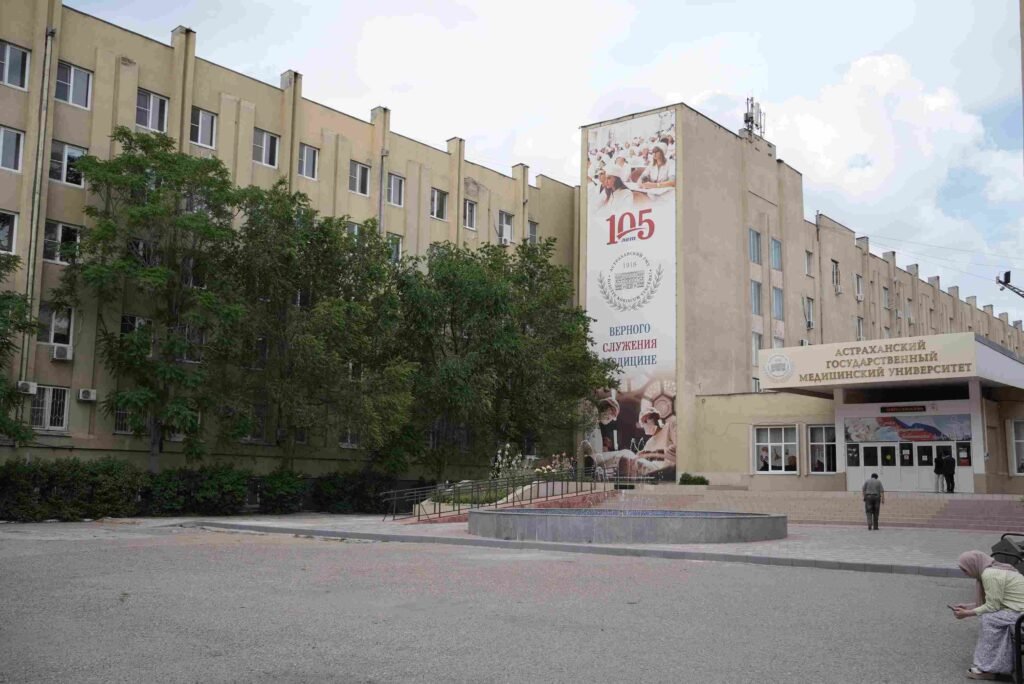
Astrakhan State Medical University is a government medical university located at Bakinskaya Street 121 in Astrakhan, Russia. It is formally known as the Federal State Budgetary Educational Institution of Higher Education “Astrakhan State Medical University” of the Ministry of Healthcare of the Russian Federation.

The university was established in 1918. According to official Russian government information, its medical education history developed from the medical faculty of Astrakhan University, which was subsequently transformed into the Astrakhan Medical Institute in 1922, the Astrakhan State Medical Academy in 1995, and finally a medical university in 2014.

The university’s own historical records also document the opening of the medical faculty in 1919 and the transformation into a dedicated medical institute in 1922.

Today, the university positions itself as a centre for medical education, healthcare training, scientific research, and international academic development.

Students can explore the university’s background and institutional information through the About Astrakhan State Medical University page.

A Century-Long Medical Education Legacy

One of the most distinctive features of Astrakhan State Medical University is its history.

The institution’s origins go back to the early 20th century. The official Russian Ministry of Health lists its date of foundation as 1918, while the university’s historical records describe the establishment of the Astrakhan regional university in November 1918 and the opening of its medical faculty in March 1919.

Over the following decades, the institution developed into a dedicated medical institute and later a medical academy and university.

This history is important for prospective students because it reflects more than simply the age of the institution. It represents decades of medical teaching, clinical education, research, and healthcare development.

The university’s long history is therefore one of the major reasons students looking for an established medical institution in Russia consider ASMU.

Where Is Astrakhan State Medical University Located?

Astrakhan State Medical University is located in Astrakhan, Russia, in the southern part of the country near the Caspian region.

Astrakhan is historically significant as a city connected with trade and cultural exchange between different parts of Russia, Europe, and Asia. The city is located around the Volga River and provides students with access to urban facilities, public transportation, shopping, restaurants, healthcare services, and recreational spaces.

For international students, the city offers an opportunity to experience Russian culture while living in a relatively student-oriented environment.

The university’s About City page provides additional information about Astrakhan, its lifestyle, cultural environment, transportation, food options, and facilities available to students.

MBBS at Astrakhan State Medical University

For international medical aspirants, the 6-year MBBS/General Medicine program is one of the university’s major attractions.

According to ASMU’s current website, the program is structured as a six-year medical education pathway combining theoretical learning with practical and clinical training. The university states that its General Medicine program is available in both English and Russian, with English-medium instruction for international students offered since 2016.

The program is designed to develop knowledge across fundamental medical sciences, clinical subjects, diagnostics, treatment, patient care, and professional medical practice.

However, students should understand that studying medicine in English does not mean that knowledge of Russian is unnecessary.

During clinical training, students may need to communicate with local patients and healthcare professionals. ASMU itself notes that basic Russian knowledge can be helpful during clinical exposure.

Key Features of the Medical Program

The university highlights several aspects of its medical education:

  • Six-year General Medicine program
  • English and Russian language options
  • Theoretical and practical medical education
  • Clinical exposure through affiliated hospitals and healthcare facilities
  • Medical laboratories and simulation-based learning
  • Research and academic opportunities
  • International student support
  • Multicultural campus environment

Students interested in understanding the university’s academic structure can also explore the Faculties at Astrakhan State Medical University page.

Language of Instruction: English or Russian?

One of the most important questions for international students is whether they can study medicine in English.

At Astrakhan State Medical University, the university states that its MBBS/General Medicine program has been offered in English and Russian since 2016.

For international students who are not fluent in Russian, the English-medium option can make the academic transition easier.

However, students should not assume that Russian can be completely ignored.

Medical education involves interaction with patients, particularly during clinical years. Learning basic Russian can therefore make everyday communication and hospital interaction significantly easier.

A practical approach is to:

  1. Study the academic curriculum in English.
  2. Learn basic Russian during the early years.
  3. Develop medical Russian vocabulary before clinical rotations.
  4. Practise common patient-interaction phrases.
  5. Continue improving language skills throughout the course.

This combination can help students feel more confident when they enter hospital-based training.

Clinical Training and Practical Exposure

Medical education cannot be limited to textbooks and lectures. Developing clinical skills requires interaction with patients, doctors, hospitals, laboratories, and real medical cases.

Astrakhan State Medical University places considerable emphasis on practical training.

According to the university, students begin hands-on clinical training from the second year, with exposure through university-affiliated hospitals and clinics. The university currently highlights 9+ university clinical hospitals as part of its practical-training ecosystem.

Clinical education can help students develop skills such as:

  • Patient communication
  • Clinical observation
  • Medical history taking
  • Physical examination
  • Diagnostic reasoning
  • Case analysis
  • Practical procedures
  • Understanding hospital workflows
  • Supervised patient care
  • Teamwork with healthcare professionals

The university also highlights case-based learning, simulation techniques, modern medical equipment, and supervised clinical experience as components of its educational approach.

This practical orientation is particularly important because future doctors need to translate theoretical knowledge into clinical decision-making.

Faculties and Academic Opportunities

Although international students often associate ASMU primarily with General Medicine, the university has a broader academic structure.

Its current faculty overview includes:

  • Faculty of Medicine
  • Faculty of Preventive Medicine
  • Faculty of Pediatrics
  • Faculty of Dentistry
  • Faculty of Pharmacy
  • Faculty of Clinical Psychology
  • Faculty of International Students
  • Faculty of Higher Nursing Education and Secondary Vocational Education

The Faculty of Medicine focuses on developing doctors through theoretical education, clinical training, laboratories, and hospital exposure.

The Faculty of Pediatrics focuses on child healthcare and pediatric education, while Preventive Medicine addresses areas such as public health, epidemiology, hygiene, and disease prevention.

The Dentistry and Pharmacy faculties provide opportunities in oral healthcare and pharmaceutical sciences respectively.

The university also has a dedicated Faculty of International Students, supporting the needs of students arriving from different countries.

For a more detailed overview, visit the Faculties section of the ASMU website.

Research and Innovation at ASMU

Modern medical education increasingly requires students to understand not only established medical knowledge but also how new discoveries are developed and evaluated.

Astrakhan State Medical University promotes research through laboratories, student research projects, seminars, conferences, and academic collaborations.

The university highlights:

  • Modern medical laboratories
  • Student research projects
  • Simulation-based learning
  • Scientific seminars
  • Medical conferences
  • International collaborations
  • Case-based academic work

Research exposure can be valuable for students who eventually want to pursue postgraduate education, academic medicine, clinical research, or specialised medical fields.

Students interested in research should actively speak with faculty members and explore opportunities to participate in projects, conferences, presentations, and scientific publications during their studies.

Campus Infrastructure and Learning Environment

A medical student’s university experience depends heavily on the quality of the learning environment.

The university describes its campus infrastructure as including:

  • Smart classrooms
  • Lecture halls
  • Medical laboratories
  • Research facilities
  • Digital library and study centres
  • Simulation and clinical-training facilities
  • Internet and Wi-Fi facilities

The objective is to combine conventional medical education with practical and technology-supported learning.

The university’s Campus Life page provides additional information about its academic environment, accommodation, student activities, clinical exposure, and international student community.

International Student Community

International students can face challenges when moving to a new country for six years of medical education.

Language, food, climate, accommodation, documentation, culture, and homesickness can all influence a student’s experience.

ASMU describes itself as having a multicultural student environment with students from different countries. The university highlights international student assistance, academic guidance, counselling, cultural adaptation support, mentorship, and language assistance.

For students coming from India and other countries, having an international student community can make the transition to Russia easier.

It also gives students the opportunity to interact with people from different cultural and educational backgrounds.

Hostel and Accommodation Facilities

Accommodation is another major consideration when selecting a medical university abroad.

Astrakhan State Medical University provides hostel accommodation for local and international students. According to the university, its accommodation facilities include furnished rooms, separate arrangements for male and female students, central heating, security, CCTV, kitchens, laundry facilities, internet connectivity, and common areas.

The university describes its hostel environment as international-student friendly, with facilities designed to support students during their academic journey.

Students can learn more through the ASMU Hostels & Accommodation page.

Hostel Facilities Highlighted by ASMU

  • Furnished rooms
  • Study tables and beds
  • Central heating
  • Wi-Fi/internet
  • Common kitchens
  • Dining areas
  • Laundry facilities
  • Recreation areas
  • Security
  • CCTV monitoring
  • Separate accommodation arrangements for boys and girls

Actual accommodation availability, room allocation, charges, rules, and facilities can change, so students should confirm the latest information directly with the university before making financial commitments.

Food and Lifestyle for Indian Students

Food is one of the practical concerns for Indian students studying abroad.

Astrakhan provides access to supermarkets, grocery stores, restaurants, cafeterias, and different food options. ASMU’s hostel information also notes the availability of Indian food and international cuisine in the surrounding area.

Students who prefer home-cooked meals can also make use of kitchen facilities where permitted.

Before travelling, students should nevertheless prepare for differences in food habits and availability. Learning to cook a few simple meals can be extremely useful during the first few months.

Student Life at Astrakhan State Medical University

Medical school is demanding, but student life should not be limited to academics.

ASMU highlights sports, cultural events, competitions, seminars, conferences, student clubs, music and dance events, and other activities as part of campus life.

The university also mentions access to sports facilities and a gym, providing students with opportunities to maintain an active lifestyle alongside their studies.

A balanced student life can help reduce academic stress and encourage students to develop communication, leadership, teamwork, and interpersonal skills.

Life in Astrakhan, Russia

Studying at Astrakhan State Medical University means living in Astrakhan for several years, so understanding the city is just as important as understanding the university.

Astrakhan offers a combination of historical architecture, cultural diversity, riverfront areas, parks, shopping facilities, restaurants, public transportation, and student-oriented services.

The university describes the city as relatively affordable and student-friendly, with access to daily essentials and recreational facilities.

Students can experience Russian traditions while also interacting with international communities.

For many international students, this becomes an important part of their overall overseas education experience.

Recognition and International Opportunities

Recognition is one of the most important factors students should investigate before choosing a medical university abroad.

Astrakhan State Medical University is listed in the World Directory of Medical Schools (WDOMS). The WDOMS listing identifies it as a public, currently operational medical school with instruction beginning in 1918. The WDOMS record also states that students and graduates meeting the relevant conditions may be eligible to apply for ECFMG Certification, subject to the applicable requirements.

However, students should understand an important distinction:

Being listed in WDOMS does not, by itself, mean that every graduate automatically receives a medical licence in another country.

Medical licensing is controlled by the relevant national or state regulatory authority.

Therefore, students planning to practise in India, the United States, Canada, the UK, or another country should independently verify the current licensing requirements applicable to their graduation year and degree.

Can ASMU Graduates Practise Medicine in India?

Students who study medicine abroad and eventually want to return to India must comply with the medical licensing requirements applicable in India.

ASMU’s website states that graduates can pursue medical practice in India after qualifying through the applicable medical licensing examination, referring to FMGE/NExT as applicable.

This is an important point for Indian students:

Studying MBBS abroad does not automatically grant the right to practise medicine in India.

Students should check the latest requirements of India’s medical regulator before admission and again before graduation because regulatory requirements can change.

They should also verify that their chosen course, institution, admission year, internship/clinical training, documentation, and other requirements meet the rules applicable to their batch.

Can ASMU Graduates Pursue Medical Careers in the United States?

The university highlights USMLE opportunities for its graduates.

The WDOMS entry for Astrakhan State Medical University currently indicates that students and graduates can be eligible to apply for ECFMG Certification when the relevant graduation year is listed as current and all other eligibility conditions are satisfied.

However, eligibility for ECFMG Certification is not the same as automatic eligibility to practise medicine in the United States.

Students seeking a US medical career generally need to meet the applicable ECFMG certification requirements and subsequently satisfy the licensing and postgraduate training requirements applicable to their intended pathway.

Therefore, students who have a long-term goal of practising in the United States should plan their medical education with USMLE and postgraduate requirements in mind from the beginning.

Is Astrakhan State Medical University Suitable for Indian Students?

For an Indian student, several factors make ASMU worth considering:

1. English-Medium Education

The university states that its General Medicine program has been available in English and Russian since 2016.

2. Long Medical Education History

The institution traces its origins to 1918 and has developed through multiple stages into a modern medical university.

3. Clinical Exposure

The university highlights clinical training from the second year and access to affiliated hospitals and healthcare facilities.

4. International Environment

ASMU promotes a multicultural environment and dedicated support for international students.

5. Student Accommodation

University hostel facilities are available for international students, with amenities such as furnished rooms, heating, internet, kitchens, laundry facilities, and security.

6. Research Opportunities

Students can participate in research projects, scientific events, conferences, and academic activities.

7. Global Pathways

The university’s WDOMS listing and ECFMG-related information provide a basis for students to investigate international career pathways, subject to all applicable licensing requirements.

Astrakhan State Medical University Admission Process

The admission process for international students should be approached systematically.

While specific admission requirements, deadlines, fees, documentation, and intake details can change, prospective students should generally prepare the following:

  1. Review the current eligibility requirements.
  2. Select the appropriate medical program.
  3. Prepare academic certificates and identification documents.
  4. Submit the application through the appropriate university admission channel.
  5. Complete document verification.
  6. Receive admission-related documentation.
  7. Complete the required financial and administrative formalities.
  8. Apply for the appropriate Russian student visa where applicable.
  9. Travel to Astrakhan after completing the required formalities.
  10. Complete university registration and accommodation procedures.

Students should always confirm the current process directly with ASMU rather than relying on outdated admission information from third-party websites.

For application enquiries, students can use the ASMU Contact Us page.

What Documents Should Students Prepare?

The exact document list can vary according to the student’s nationality, program, intake, and current Russian regulations.

Prospective international students should be prepared to provide documents such as:

  • Passport
  • Academic certificates
  • School transcripts/mark sheets
  • Passport-size photographs
  • Medical documents where required
  • Admission/application documents
  • Translated or notarised documents where required
  • Visa-related documentation
  • Other documents requested by the university or authorities

Indian students should make sure that their educational and medical documents are consistent with the requirements applicable to their admission year.

Tuition Fees and Cost of Living

The total cost of studying medicine abroad is not limited to tuition fees.

Students should consider:

  • Tuition fees
  • Hostel fees
  • Food
  • Travel
  • Visa and documentation expenses
  • Medical insurance
  • Books and study materials
  • Personal expenses
  • Local transportation
  • Flight tickets
  • Emergency funds

ASMU describes its medical education and living costs as affordable compared with many international medical education destinations.

However, students should not rely on a fixed fee figure published elsewhere unless it has been confirmed for their intake. Tuition and accommodation charges can change from year to year.

For the most accurate current fee structure, students should contact the university directly through the official ASMU website.

Why Choose Astrakhan State Medical University?

There are several reasons a student may consider ASMU for medical education in Russia.

Established Medical Institution

With origins dating to 1918, the university has more than a century of institutional history.

English-Medium Option

International students can pursue the General Medicine program in English, according to the university’s current information.

Clinical Learning

The university places significant emphasis on practical training and clinical exposure.

International Student Support

Students from different countries study within a multicultural environment with dedicated international student support.

Research Exposure

Students can participate in academic research, conferences, seminars, and scientific projects.

Student Life

Sports, cultural events, student clubs, competitions, and recreational activities provide opportunities beyond classroom learning.

Hostel Facilities

On-campus or university-provided accommodation helps international students manage one of the most important aspects of moving abroad.

International Career Planning

The university’s WDOMS listing and ECFMG information allow eligible students to explore international postgraduate and licensing pathways, subject to the rules of the relevant authorities.

Important Things Students Should Consider Before Joining

No medical university should be selected solely because of advertisements or rankings.

Before joining Astrakhan State Medical University, students should independently verify:

  • Current tuition fees
  • Current hostel fees
  • Admission eligibility
  • Clinical training structure
  • Language of instruction
  • Russian-language requirements
  • Current recognition and regulatory requirements
  • Licensing requirements in the country where they intend to practise
  • Internship requirements
  • Degree title
  • Current admission rules
  • Visa requirements
  • University policies for international students

This is particularly important for students planning to return to India after graduation.

Frequently Asked Questions About Astrakhan State Medical University

Is Astrakhan State Medical University a government university?

Yes. The university is a federal state budgetary higher-education institution under the Ministry of Healthcare of the Russian Federation.

When was Astrakhan State Medical University established?

The university’s official foundation date is November 7, 1918. Its medical faculty opened in 1919, and the institution became a dedicated medical institute in 1922.

Is MBBS available in English?

Yes. ASMU states that its General Medicine program has been offered in English and Russian since 2016.

How long is the MBBS program?

The university describes the General Medicine program as a six-year program.

Does ASMU provide clinical training?

Yes. The university states that students receive hands-on clinical exposure beginning from the second year through affiliated hospitals and clinics.

Is Russian language necessary?

The academic program can be studied in English, but Russian can be highly useful during clinical training because students interact with local patients. ASMU itself recommends basic Russian knowledge for clinical interaction.

Does Astrakhan State Medical University provide hostel accommodation?

Yes. The university describes hostel facilities for local and international students, including furnished rooms, heating, internet, kitchens, laundry facilities, and security.

Is Astrakhan State Medical University listed in WDOMS?

Yes. The World Directory of Medical Schools currently lists Astrakhan State Medical University as an operational public medical school with instruction beginning in 1918.

Can graduates practise in India?

Graduates must meet the applicable Indian medical licensing requirements. ASMU’s website states that graduates can pursue medical practice in India after qualifying through the applicable licensing examination, such as FMGE/NExT as applicable.

Can graduates pursue USMLE?

The university promotes USMLE-related opportunities, while the current WDOMS listing states that eligible students and graduates may apply for ECFMG Certification when the relevant graduation-year and other requirements are met.

Where is the university located?

The university is located at 414000, Bakinskaya Street 121, Astrakhan, Russia.

Final Thoughts: Is Astrakhan State Medical University Worth Considering?

Astrakhan State Medical University offers international medical students a combination of historical academic foundations, English-medium General Medicine education, clinical exposure, research opportunities, international student support, accommodation, and a multicultural student environment.

Its origins date back more than a century, while its current educational structure incorporates modern laboratories, clinical training, simulation-based learning, research opportunities, and student activities.

For Indian students, the availability of English-medium education and a dedicated international student environment can be particularly relevant. At the same time, students should understand that studying medicine abroad is a long-term commitment. Choosing a university should therefore involve careful verification of recognition, current admission rules, total costs, clinical training, and the licensing requirements of the country where the student ultimately wants to practise.

If you are considering Astrakhan State Medical University for your medical education, start by reviewing the official ASMU website, explore the Why Join ASMU section, learn about Campus Life, check the Faculties, and review Hostel & Accommodation before beginning the application process.

Your medical career begins with choosing the right foundation. Research carefully, verify the current requirements, and make an informed decision about your future.

Quick Overview of Astrakhan State Medical University

Feature Details
University Astrakhan State Medical University
Location Astrakhan, Russia
Established 1918
Type Public / Federal State Medical University
Ministry Ministry of Healthcare of the Russian Federation
Main International Program General Medicine / MBBS
Program Duration 6 years
Language English and Russian
English-Medium Program Available since 2016, according to ASMU
Clinical Training From the second year, according to ASMU
Clinical Facilities 9+ university clinical hospitals highlighted by ASMU
International Students Yes
Hostel Available
WDOMS Listed
ECFMG Eligibility information available through WDOMS, subject to requirements
City Astrakhan
Official Website ASMU

Frequently Asked Questions About Astrakhan State Medical University

1. What is Astrakhan State Medical University and where is it located?

Astrakhan State Medical University (ASMU) is a government medical university located in Astrakhan, Russia. The institution traces its origins back to 1918 and has a long history of medical education, healthcare training, and scientific research. The university operates under the Ministry of Healthcare of the Russian Federation and welcomes students from Russia as well as various international countries.

ASMU offers medical education with a strong focus on theoretical knowledge, practical learning, clinical exposure, research, and professional development. Its location in Astrakhan gives international students the opportunity to experience Russian culture while studying in a university environment with access to hospitals, laboratories, student accommodation, sports facilities, and other essential services.

Students can learn more about the university’s history, infrastructure, and academic environment on the official ASMU website.

2. Is MBBS available in English at Astrakhan State Medical University?

Yes. Astrakhan State Medical University offers its General Medicine program in English and Russian. According to the university, the English-medium General Medicine program has been available since 2016, making it an option for international students who may not be comfortable studying a medical curriculum entirely in Russian.

English-medium education allows students to understand lectures, textbooks, examinations, and academic material more comfortably. However, students should not completely ignore Russian. During clinical training, interaction with local patients and healthcare professionals may require knowledge of basic Russian.

Learning Russian alongside the English-medium medical curriculum can therefore be extremely useful for communication, patient interaction, everyday life, and clinical practice.

3. How long is the MBBS course at Astrakhan State Medical University?

The General Medicine/MBBS program at Astrakhan State Medical University is structured as a six-year medical education program. The course combines fundamental medical sciences, clinical subjects, practical training, laboratory work, and hospital-based learning.

During the initial stages, students develop their foundation in subjects such as anatomy, physiology, biochemistry, pathology, microbiology, and other basic medical sciences. As they progress, the curriculum increasingly focuses on clinical disciplines and practical application of medical knowledge.

The later years provide greater exposure to clinical environments, allowing students to understand how theoretical concepts are applied to real patients and medical cases.

Students should always verify the current curriculum, duration, academic requirements, and applicable regulations for their admission year before enrolling.

4. Does Astrakhan State Medical University provide clinical training to MBBS students?

Yes. Clinical training is an important part of medical education at Astrakhan State Medical University. The university states that students begin hands-on clinical exposure from the second year through university-affiliated hospitals and clinics.

Clinical education gives students an opportunity to gradually move beyond classroom-based learning and understand real-world medical practice. Depending on the stage of the program, students can gain exposure to areas such as patient interaction, clinical examination, diagnosis, treatment planning, medical procedures, case discussions, and supervised patient care.

ASMU currently highlights access to 9+ university clinical hospitals and promotes case-based learning, simulation techniques, medical equipment, and supervised clinical exposure.

This practical component is particularly important for students who want to develop clinical confidence before entering professional medical practice.

5. Is Astrakhan State Medical University recognized internationally?

Astrakhan State Medical University is listed in the World Directory of Medical Schools (WDOMS). Its WDOMS listing identifies the institution as a public, currently operational medical school with instruction beginning in 1918.

The WDOMS listing also provides information relevant to students and graduates considering international pathways, including ECFMG-related eligibility information subject to applicable requirements.

However, students should understand that WDOMS listing does not automatically provide a medical licence in every country. Medical practice is regulated separately by national and regional medical authorities.

Therefore, students should check the current licensing requirements of the country where they intend to practise. For example, Indian students should verify the requirements applicable to foreign medical graduates in India, while students planning to work in the United States should independently verify the current ECFMG, USMLE, residency, and state licensing requirements.

6. Can Indian students study MBBS at Astrakhan State Medical University and later practise in India?

Indian students can consider Astrakhan State Medical University for medical education, but completing a medical degree in Russia does not automatically give a graduate the right to practise medicine in India.

Indian students returning after studying medicine abroad must satisfy the current requirements of India’s medical regulatory framework, including the applicable screening/licensing examination and other requirements for foreign medical graduates.

The exact regulations can change over time, so students should verify the rules applicable to their admission and graduation batches before joining the university.

Students should also carefully check factors such as the university’s current status, course structure, duration, clinical training, internship requirements, documentation, and other eligibility conditions relevant to Indian medical graduates.

For admission-related guidance, students can contact ASMU through its official contact page.

7. Does Astrakhan State Medical University provide hostel accommodation for international students?

Yes. Astrakhan State Medical University provides hostel accommodation for students, including international students. The university highlights facilities such as furnished rooms, central heating, internet connectivity, kitchens, laundry facilities, common areas, security, and CCTV monitoring.

Hostel accommodation can be particularly useful for international students because it provides a structured living environment close to the university and helps students adjust to life in Russia.

Students can also benefit from living alongside other students and international classmates, which can make it easier to build friendships and adapt to a new country.

Accommodation availability, room allocation, hostel charges, rules, and facilities may vary according to the academic year. Students should therefore confirm the latest hostel details directly with the university before travelling.

8. What is student life like at Astrakhan State Medical University?

Student life at Astrakhan State Medical University extends beyond lectures and clinical training. The university promotes a range of extracurricular activities designed to support students’ physical, social, cultural, and personal development.

Students can participate in sports activities, competitions, cultural programs, recreational activities, seminars, conferences, and other university events. The university also highlights sports facilities and a gym for students.

International students have the opportunity to interact with classmates from different cultural backgrounds, creating a multicultural campus environment.

Living in Astrakhan also allows students to experience Russian culture, local traditions, food, festivals, architecture, and everyday life.

Students can explore more about the environment through the ASMU Campus Life section.

9. What makes Astrakhan State Medical University a good option for international students?

There are several factors that international students may consider when evaluating Astrakhan State Medical University.

First, the university has a long history of medical education dating back to 1918. Second, the General Medicine program is available in English, which can make academic learning more accessible for international students. Third, the university emphasizes practical and clinical training alongside theoretical education.

Other factors include international student support, hostel accommodation, research opportunities, medical laboratories, simulation-based learning, sports and cultural activities, and a multicultural student environment.

The university’s location in Astrakhan also gives students the opportunity to experience life in Russia while pursuing a medical degree.

However, students should not select a university based on a single factor. Before making a final decision, they should compare curriculum, total cost, clinical exposure, accommodation, recognition, admission requirements, and the licensing pathway for the country where they ultimately want to practise.

10. What should students check before applying to Astrakhan State Medical University?

Before applying to Astrakhan State Medical University, prospective students should carefully verify all current admission and regulatory requirements rather than relying solely on third-party advertisements or outdated information.

Important points to check include:

  • Current admission eligibility
  • Academic requirements
  • NEET or other requirements applicable to Indian students
  • Current tuition fees
  • Hostel and accommodation charges
  • Program duration and curriculum
  • English-medium education
  • Russian-language requirements during clinical training
  • Clinical training structure
  • University and medical-school recognition
  • WDOMS listing and applicable international eligibility
  • Requirements for practising medicine in India or another destination country
  • Visa and immigration requirements
  • Medical insurance requirements
  • Required academic and personal documents
  • Application deadlines
  • Current university policies for international students

Students should obtain the latest information directly from ASMU before paying fees or making travel arrangements. The official Astrakhan State Medical University website is the best starting point for reviewing university information, while the Contact Us page can be used for current admission-related enquiries.

Choosing a medical university is a long-term decision. Students should compare all relevant academic, financial, clinical, regulatory, and career factors before beginning their six-year medical journey.