Astrakhan State Medical University
August 24, 2026
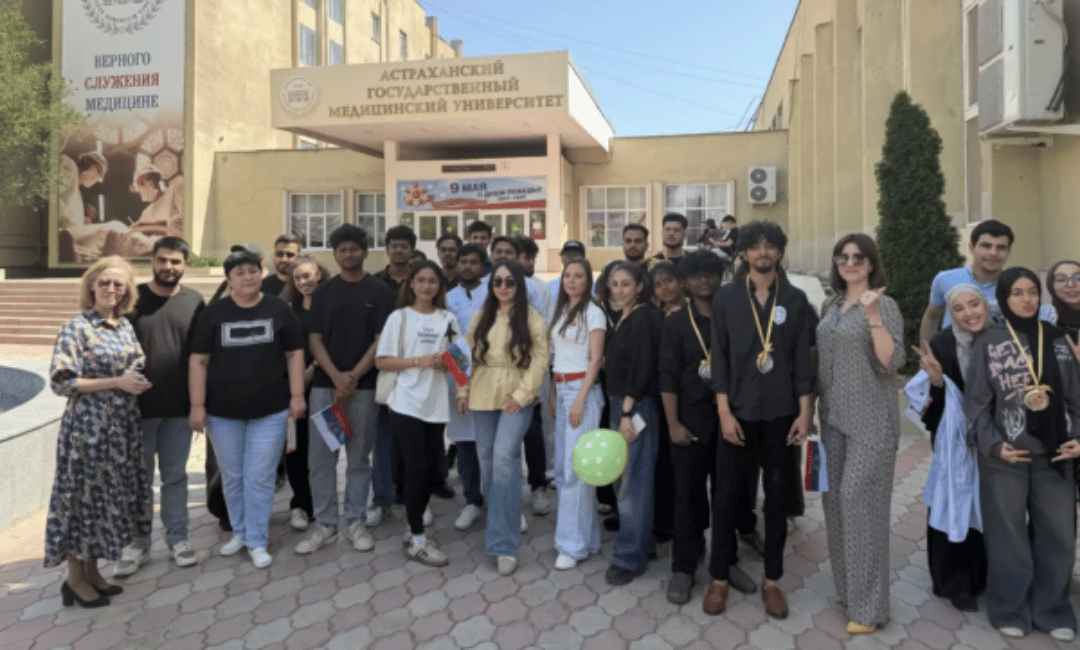
Choosing a medical university is not only about academics, tuition fees, or clinical training. For students pursuing a six-year medical degree abroad, student life is an equally important part of the experience.
For an international student, the university becomes a second home. The quality of accommodation, campus environment, friendships, cultural activities, food, sports, safety, transportation, and opportunities to explore the city can all shape the overall experience.
Astrakhan State Medical University (ASMU) offers international students a multicultural academic environment in the historic Russian city of Astrakhan. The university highlights modern educational infrastructure, student accommodation, cultural activities, sports, research opportunities, clinical exposure, and dedicated support for international students.
This guide explores what students can expect from student life at Astrakhan State Medical University, including campus life, hostel accommodation, international student communities, food, sports, cultural events, clinical exposure, life in Astrakhan, and the overall student experience.
Life at Astrakhan State Medical University is designed around more than classroom learning.
Students spend their time attending lectures and practical classes, working in laboratories, participating in clinical training, studying for examinations, joining university activities, socialising with classmates, and exploring life in Astrakhan.
The university describes its campus as a multicultural environment where students from different countries come together for education and personal development. It also highlights academic guidance, counselling, cultural adaptation support, mentorship, and language assistance for international students.
This combination of academics and extracurricular activities gives students the opportunity to develop not only as medical students but also as independent young professionals.
One of the most interesting aspects of studying abroad is the opportunity to interact with people from different backgrounds.
At Astrakhan State Medical University, international students study alongside students from different countries, creating a multicultural environment. The university specifically highlights its international student community and support services designed to help foreign students adapt to university and life in Russia.
For an international student, this can mean:
For medical students, this international exposure can also be valuable because healthcare increasingly involves communication across cultures and communities.
The campus environment plays an important role in a student’s daily routine.
ASMU highlights modern classrooms, lecture halls, medical laboratories, research facilities, digital library and study spaces, simulation facilities, clinical-training infrastructure, and internet connectivity.
Students therefore have access to spaces for both academic learning and independent study.
A typical academic routine may include:
Morning: Lectures and theoretical classes
Afternoon: Practical classes, laboratory work or clinical training
Evening: Self-study, assignments, group discussions, sports, social activities or personal time
Medical education requires consistent study, so students generally need to develop a disciplined routine. At the same time, having access to recreational activities can help students maintain a healthier balance.
For international students, accommodation is one of the first things to consider after arriving in Russia.
Astrakhan State Medical University provides hostel accommodation for local and international students, with the university describing its hostels as secure, comfortable, and designed to support students during their academic journey.
The facilities highlighted by ASMU include:
Living in a university hostel can make the transition to a foreign country easier.
Students are able to live close to their academic environment and interact with fellow students on a daily basis. Hostel life can also help students develop independence, time management, communication skills, and responsibility.
For many international students, some of their closest friendships can begin in their hostel.
Moving to another country can initially feel unfamiliar. Students may be away from their families, familiar food, local language, and established social circles.
The international environment at ASMU can help students build new friendships.
Students can meet classmates through:
Over time, these friendships can become an important part of the overseas university experience.
International students can also learn from one another about different cultures, languages, food traditions, festivals, and lifestyles.
Medical students spend many hours studying, attending practical classes, and preparing for examinations. Maintaining physical activity can therefore be an important part of student life.
ASMU highlights sports facilities, a university gym, sports competitions, fitness activities, and recreational opportunities for students.
Students can use sports and fitness activities as a way to:
Sports competitions can also provide students with opportunities to represent their groups or participate in university-wide activities.
University life becomes much more memorable when students have opportunities to celebrate together.
ASMU highlights cultural celebrations, international festivals, music and dance events, talent activities, sports tournaments, community programs, and other student activities.
These events can help international students remain connected to their own cultures while also discovering Russian traditions and other cultures represented on campus.
Cultural activities can include:
Such events also provide students with opportunities to develop confidence, creativity, communication skills, and leadership abilities.
While student life is important, academics remain the centre of the university experience.
Medical education is intensive, and students need to dedicate significant time to lectures, practical classes, laboratory work, clinical training, assignments, and examinations.
ASMU’s campus environment combines academic facilities with recreational and student activities, allowing students to create a balanced routine.
A successful student generally learns to balance:
Study + Clinical Training + Sleep + Fitness + Social Life + Personal Development
Students who establish a consistent schedule early in their medical education are more likely to manage the demands of the course effectively.
At a medical university, clinical exposure is not simply an academic requirement—it becomes an important part of everyday student life.
ASMU states that students receive hands-on clinical training through affiliated hospitals and healthcare centres, including early clinical exposure, patient interaction, simulation practice, and case-study opportunities.
As students progress through their course, their routine gradually moves from predominantly classroom-based learning towards greater clinical involvement.
This gives students opportunities to observe how doctors communicate with patients, understand hospital workflows, discuss medical cases, and apply theoretical knowledge in practical settings.
For many students, this is when the experience of becoming a doctor begins to feel more real.
Students enrolled in English-medium medical programs may still benefit greatly from learning Russian.
ASMU states that its General Medicine program is offered in English and Russian, while also noting that basic Russian can be helpful during clinical training because students interact with local patients.
Learning Russian can make everyday life easier as well.
It can help students communicate when:
Students do not necessarily need to become fluent immediately. Building vocabulary and learning practical phrases gradually can make the transition much easier.
Food is an important part of adapting to life abroad.
Astrakhan offers supermarkets, local markets, restaurants, cafés, and food options for different preferences. ASMU’s city information specifically highlights access to Indian and international cuisine, while its hostel information notes shared kitchen facilities and nearby grocery stores.
Students can therefore choose between eating outside, buying groceries, or preparing meals themselves where hostel facilities permit.
For Indian students, access to familiar food can make the initial transition to Russia more comfortable.
At the same time, exploring Russian cuisine can become an enjoyable part of the international student experience.
Student life is not limited to university buildings.
Astrakhan itself provides students with opportunities to experience Russian culture and explore the city.
The city is located near the Volga River and Caspian region and is known for its historical architecture, cultural diversity, parks, riverfront areas, cafés, shopping areas, and recreational spaces. ASMU describes Astrakhan as a student-friendly city with public transportation, everyday services, healthcare facilities, shopping, and entertainment options.
Students can spend their free time:
These experiences can provide a welcome break from the intensity of medical education.
The overall cost of living is an important consideration for international students.
ASMU describes Astrakhan as an affordable and student-friendly city, with access to supermarkets, public transportation, restaurants, healthcare services, shopping, and everyday facilities.
Students should budget separately for:
Actual spending will vary considerably according to lifestyle.
A student who cooks regularly and uses public transportation may spend differently from someone who frequently eats at restaurants or travels.
Safety and adaptation are important considerations when moving abroad.
ASMU describes Astrakhan as a peaceful and welcoming environment and highlights hostel security measures such as 24-hour security and CCTV monitoring.
The university also highlights international student assistance, academic guidance, counselling, mentorship, cultural adaptation support, and language assistance.
International students should nevertheless follow normal safety practices:
Being responsible and aware is an important part of living independently abroad.
Student life at a medical university can also include academic activities beyond the standard curriculum.
ASMU highlights scientific conferences, seminars, workshops, research opportunities, case studies, and student research projects.
Students interested in research or academic medicine can use these opportunities to:
Participation in such activities can be particularly useful for students considering postgraduate education or research-oriented careers.
Every student’s schedule will be different depending on their year and academic timetable, but a typical day may look something like this:
Students begin their day with breakfast before attending lectures, practical classes, or other academic sessions.
The afternoon may involve laboratory work, practical sessions, clinical exposure, hospital training, or additional academic activities.
After academic commitments, students may return to the hostel, study independently, complete assignments, attend the gym, participate in sports, or spend time with friends.
Students typically use the evening for revision and preparation for the next day’s classes.
On weekends, students may have more time for sports, cultural activities, shopping, sightseeing, socialising, or exploring Astrakhan.
The exact schedule depends on the student’s year, timetable, examinations, and clinical responsibilities.
The first few weeks can be the biggest adjustment for an international student.
Students may need time to become comfortable with:
The best approach is to adapt gradually.
Students should remain open-minded, ask questions when they are unsure about something, communicate with classmates and university staff, and build a routine that includes both academic responsibilities and personal well-being.
A medical degree takes several years of sustained effort. Students need an environment where they can study effectively while also maintaining their physical and social well-being.
A positive student experience can help develop:
Independence — Living away from home teaches students to manage daily responsibilities.
Communication — Interacting with international classmates improves communication and interpersonal skills.
Teamwork — Sports, group activities, clinical training, and academic projects encourage collaboration.
Confidence — Participating in events and adapting to a new environment can build confidence.
Cultural awareness — Living among people from different backgrounds broadens students’ perspectives.
Professional maturity — Clinical exposure and interaction with healthcare professionals help students understand the responsibilities of being a doctor.
Astrakhan offers an interesting combination of university education and city life.
According to ASMU, students benefit from a relatively affordable lifestyle, public transportation, cultural diversity, shopping facilities, healthcare services, restaurants, recreational spaces, and access to the city’s historical and natural attractions.
The city’s location near the Volga River and Caspian region also gives students a distinctive environment compared with larger Russian cities.
For students who prefer a city where they can focus on education while still having access to everyday urban facilities, Astrakhan can be an interesting option to consider.
Student life at Astrakhan State Medical University is about much more than attending medical classes.
Students become part of an international academic community, live in a multicultural environment, participate in sports and cultural activities, gain clinical exposure, explore research opportunities, and experience everyday life in Russia.
The university highlights modern academic facilities, international student support, hostel accommodation, cultural programs, sports, clinical training, and recreational opportunities.
At the same time, students should remember that medical education requires discipline. The most rewarding university experience comes from finding the right balance between academic responsibilities and personal life.
For prospective students, the ASMU Campus Life page provides further information about the university environment. Students can also explore ASMU Hostels, learn more about Astrakhan, or visit the official Astrakhan State Medical University website for additional information.
Student life at Astrakhan State Medical University combines academic learning, clinical training, accommodation, sports, cultural activities, research, and social interaction. The university promotes a multicultural environment for students from different countries and highlights student activities such as cultural festivals, sports competitions, seminars, conferences, music and dance events, and student clubs.
Students generally spend their weekdays focused on lectures, practical classes, laboratory work, clinical training, and self-study, while evenings and weekends can be used for sports, social activities, cultural programs, sightseeing, or personal time.
Yes. ASMU provides hostel accommodation for local and international students. The university highlights furnished rooms, central heating, Wi-Fi, kitchens, laundry facilities, common areas, security, and CCTV monitoring. Separate accommodation arrangements are also provided for boys and girls.
Hostel life can also be an important social part of the university experience because students live alongside classmates and other international students.
Students can participate in a variety of academic and extracurricular activities. ASMU highlights sports tournaments, fitness activities, cultural celebrations, international festivals, music and dance events, talent programs, student clubs, scientific conferences, workshops, and community programs.
These activities allow students to take breaks from academics while developing teamwork, leadership, communication, and social skills.
According to ASMU, Astrakhan offers a student-friendly environment with relatively affordable living, public transportation, shopping facilities, restaurants, healthcare services, recreational areas, and cultural attractions. The city also has a multicultural character influenced by its historical position as a trading and cultural centre.
International students should still take time to understand local customs, transportation, weather, costs, and regulations after arriving.
Yes. ASMU’s information for students states that Indian food and other international cuisine options are available around the city. Students can also purchase groceries and use shared kitchen facilities in the university hostel to prepare meals where permitted.
Indian students may therefore have options to maintain familiar food habits while also exploring Russian and other international cuisines.
Yes. The university highlights sports facilities, a university gym, sports competitions, fitness activities, and recreational opportunities as part of student life.
Participating in sports can be a useful way for students to maintain physical fitness, meet classmates, take a break from studying, and maintain a balanced lifestyle during medical school.
ASMU highlights several forms of international student assistance, including academic guidance, counselling, cultural adaptation support, mentorship, and language assistance.
Such support can be particularly useful during the first months, when students are adapting to a new country, university system, language, accommodation, and culture.
Although ASMU offers General Medicine in English, learning basic Russian can be very useful. The university specifically notes that students interact with local patients during clinical training, making Russian language skills helpful.
Russian can also make everyday activities such as shopping, travelling, ordering food, communicating with local people, and navigating healthcare facilities easier.
Yes. Students have opportunities to explore Astrakhan outside their academic schedule. The city offers historical sites, cultural attractions, parks, riverfront areas, cafés, shopping facilities, and recreational spaces.
Students can use weekends and academic breaks to explore the city and, subject to their schedules and applicable travel requirements, other destinations in Russia.
However, medical students should plan travel around lectures, examinations, clinical responsibilities, and university requirements.
The key is to create a structured routine. Medical education requires consistent study, but students can still make time for fitness, friendships, cultural events, hobbies, and exploring the city.
A practical routine can include dedicated study hours, regular sleep, physical activity, planned social time, and advance preparation for examinations.
ASMU’s combination of academic infrastructure, clinical training, sports, cultural activities, accommodation, and international student support provides opportunities for students to build a balanced university experience.
Ultimately, the goal is not to choose between academic success and student life, but to develop the discipline to manage both successfully.